Monday, November 4, 2013

Can a simple supplement help prevent Alzheimer's disease? By Jerry Brainum

While there are many ways to die, one of the worst has to be Alzheimer's disease (AD). As most people are aware, AD is a neuro-degenerative disease of the brain, where the loss of neurons or brain cells in certain areas of the brain leads to significant cognitive deficits, especially in memory and learning ability. The disease was first noticed by Alois Alzheimer, a physician who described the symptoms in a 55-year-old woman. At that time, the precise cause of AD wasn't known, and even today, with all the advances in science and medicine made since Alzeheimer first described his patient, the precise mechanisms that lead to AD still aren't fully established.
   The characteristic changes in the brain that occur with AD involve a build-up of two proteins: beta-amyloid (BA) and Tau. The increase in BA results in an overabundance of neuritic plaques in the brain that interfere with normal nerve transmission. The other protein, tau, leads to disordered tangles of nerve material, known as neurofibrillary tangles. Interestingly, most older people have both of these proteins in their brains, yet show no symptoms of AD. The reason why others do show symptoms of AD is because the BA and tau increases to abnormal levels in certain parts of the brain.
    The statistics associated with AD are sobering. Currently, 5.3 million people are estimated to be afflicted with AD, and it is the 6th leading cause of death. It tends to strike those over 65 more frequently (13% of those over 65 have AD), although early-onset AD can show up as early as age 40. Every 68 seconds, someone becomes afflicted with AD. By 2050, that figure will rise to every 30 seconds, with 11-16 million people being diagnosed with AD. One in three seniors has AD. Women get it more often than men. Since 2000, the number of deaths from AD has risen by 68%, while deaths from other causes, including cancer and cardiovascular disease, have dropped.
     As to the precise causes, there are many theories, and there may be more than one cause. For example, head trauma is known to increase both forms of abnormal AD proteins in the brain. Some suspect that today's athletes who are involved in sports that feature frequent head trauma, such as boxing and football, will later in life suffer from AD. Indeed, some of the greatest past champions, such as boxing legend, Sugar Ray Robinson, did get severe forms of AD late in life. Having two copies of a gene called APO-E4, increases the chances of acquiring AD  by 80%. Having the genes doesn't guarantee the future development of AD, but does increase the risk. Recent research shows why APOE-4 is linked to AD. It lowers a protein called SIRT-1 that protects neurons. This implies that ingesting substances that may boost SIRT-1, such as resveratrol from red wine and quercetin, may offer some protection to those predisposed to AD because of having two genes for APOE-4. Fish oil offers some AD protection, especially the omega-3 fatty acid, DHA. However, the fish oil protective effect is negated in those with two APOE-4 genes. Green tea has also been shown in some studies to offer some AD protection if ingested chronically. Curcumin, which is contained in turmeric, has been shown in test-tube studies to not only prevent the build-up of BA in the brain, as well as Tau, but also to remove existing excess deposits of BA in isolated brain tissue. The problem with current curcumin supplements, however, is that they are rapidly converted in the liver to inactive metabolites, so that little or none enters the brain.
    The most alarming aspect of AD is that there is no current effective way to prevent or treat the disease. However, the supplements mentioned earlier, through offsetting the buildup of abnormal BA and Tau, may offer some protection against the development of AD. The trick is that you have to start ingesting these supplements before the symptoms begin. Exercise is also effective at helping to prevent AD. It does this through boosting the level of brain-derived neurotrophic factor, which works by maintaining and repairing damaged brain cells. The increase in oxygen delivery to the brain offered by exercise also helps maintain neurons.
    A new study that used mice as subjects found that a common food ingredient, also available in supplement form called phytosterols may offer potent protection against the onset of AD. Not all phytosterols were equally effective in this regard. The one that stood out was stigmasterol,which also happens to be the type of phytosterol least found in food sources. Those food sources include vegetable oils and nuts. Phytosterols are best described as "plant cholesterol,"since plants do not synthesize cholesterol. But phytosterols do have a close physical resemblance to cholesterol to the point where they can displace cholesterol in the intestines, thus reducing cholesterol uptake from food sources. As such, they are capable of lowering blood cholesterol levels by 7 to 10.5% on average, and when used concurrently with statin drugs, boost the cholesterol-lowering effect of statins significantly. At one point, phytosterols were sold as "anabolic" supplements, with the idea that, since cholesterol is the raw material used in the body to synthesize testosterone, phytosterols would do the same. Unfortunately, it doesn't work that way. However, some phytosterols, such as beta-sitosterol, seem to interfere with the activity of DHT, a byproduct of testosterone metabolism linked to prostate enlargement. In fact, beta-sitosterol is the active ingredient in the herb, Saw palmetto, often used to treat BPE.
    In the new mouse study, stigmasterol was found to profoundly interfere with the synthesis of both BA and tau. In fact, it lowered the level of BA in mouse brain by a whopping 68%. It's important to note that while cholesterol is not the major player in cardiovascular disease as it has been long portrayed to be, in the brain, excess cholesterol is a definite stimulant to overproduction of BA. However, too little cholesterol in the brain is also associated with some forms of dementia. Ingesting stigmasterol may prove to be a way to control excess BA without interfering with normal cholesterol metabolism in the brain. Since this was a mouse study, it remains to be confirmed whether the same protective effect that occurred in the mice will also happen in human brains. But if it does, it will be far more effective as a preventive against AD onset than any existing drugs used to treat AD, all of which do little or nothing to halt the progression of the disease.

Burg, VK, et al. Plant sterols the better cholesterol in Alzheimer's disease? A mechanistical study.J Neuroscience  2013: in press.


©,2013 Jerry Brainum. Any reprinting in any type of media, including electronic and foreign is expressly prohibited.


Have you been ripped off by supplement makers whose products don’t work as advertised? Want to know the truth about them? Check out Jerry Brainum's book Natural Anabolics, available at JerryBrainum.com.


Want more evidence-based information on exercise science, nutrition and food supplements, ergogenic aids, and anti-aging research? Check out Applied Metabolics Newsletter at www.appliedmetabolics.com.


The Applied Ergogenics blog is a collection of articles written and published by Jerry Brainum over the past 20 years. These articles have appeared in Muscle and Fitness, Ironman, and other magazines. Many of the posts on the blog are original articles, having appeared here for the first time. For Jerry’s most recent articles, which are far more in depth than anything that appears on this blog site, please subscribe to his Applied Metabolics Newsletter, at www.appliedmetabolics.com. This newsletter, which is more correctly referred to as a monthly e-book, since its average length is 35 to 40 pages, contains the latest findings about nutrition, exercise science, fat-loss, anti-aging, ergogenic aids, food supplements, and other topics. For 33 cents a day you get the benefit of Jerry’s 53 years of writing and intense study of all matters pertaining to fitness,health, bodybuilding, and disease prevention.


See Jerry's book at  http://www.jerrybrainum.com


Thursday, October 31, 2013

Weight rebound after a low calorie diet: what works to prevent it? by Jerry Brainum


It's not that hard to lose excess body fat. All it takes is willpower and perseverance. No matter what type of diet that you choose, you need to consume less calories that you use through activity, including exercise.As to the best type of diet to use, there is no one size fits all formula, despite the plethora of diet books that claim the contrary. And the notion promulgated by some self-serving experts that "calories don't count," is also utter nonsense, since it goes against the physical principles of what causes weight, or more specifically, fat loss in the body. What you lose during a diet also makes a difference. The ideal is to lose excess body fat without sacrificing lean tissue, mainly muscle. When you lose muscle from extreme dieting, your resting metabolic rare declines, a scenario that favors rapid weight return. The primary cause of lost muscle mass from dieting is either too extreme a drop in calories, such as a starvation diet that doesn't supply sufficient protein to support lean mass maintenance, or a lack of exercise, especially resistance training.
    The truth is that 97 percent of those who go on a diet to lose body fat gain it all back. This is more likley to occur with more extreme diets, such as diets that feature a total daily caloric intake of under 1,000, or a diet that emphasizes zero carbohydrate intake. Such diets go against the natural grain of body metabolism, and the body reacts to such extreme measures by overcompensation, such as a reduction in thyroid hormone output that favors the regain of lost weight.
   But are there things you can do to prevent the return of lost body fat following a diet?  One way is to not try to go on a crash diet that is too low in calories. Instead aim for a more gradual weight-loss of about two pounds per week. This allows the body and the brain to adjust to the weight loss, and ensures greater long-term body compliance. The odds of maintaining lost weight following a crash diet are low, and only those with a zen-like degree of willpower are able to accomplish that goal.
    A newly published meta-analysis (an analysis of prior studies that is brought to a rational conclusion) examined various factors that may aid in keeping the weight off following a diet. The analysis looked at 20 studies involving 3,017 participants. The type of diets examined in the study were either low calorie, defined as 1,200 calories a day or less, and very low calorie, defined as 800 calories a day or less. The study noted that the main reasons for weight regain after a diet include adaptive thermogenesis, whereby the body adapts to a lower calorie intake, and increasing calories then results in weight gain; increased release of appetite-stimulating hormones, such as ghrelin; and simply a relapse in the same eating habits that produced excess fat in the first place.
    The study found that anti-obesity drugs seemed to help keep weight off after a diet. The study focused on two such drugs. Orlistat inhibits fat absorption, but has a high rate of side effects. The other drug mentioned was sibutramine, which reduces appetite, but also can cause heart problems. For that reason, it was removed from the market three years ago. But it still often shows up surreptitiously in various "fat-loss" supplements. In truth, perhaps the most effective fat-loss combination consisted of ephedrine and caffeine. This combination was so effective that it threatened the sale of more ineffectual diet drugs, leading to the eventual ban of ephedrine under the guise that it was toxic, which was nonsense. As such, current diet drugs are, in a word, crap, despite the finding of this new study.
   The study also suggested that meal replacements can aid the prevention of rebound weight gain. They are usually low in calories, and allow the dieter to know precisely what they are consuming in terms of calories and nutrient content. Most also are higher in protein, which helps to maintain lean mass, a key component of keeping the weight off.
   A high protein diet was also suggested as an effective tool for preventing weight- regain. High protein intake (at least 30% of total calories) not only helps maintain muscle mass through offsetting catabolic effects in muscle, but also increases feelings of satiety, thus helping to prevent overeating. Higher protein foods also produce a greater degree of diet-induced thermogenesis, which means greater resting calorie burn.
   Consumption of low glycemic index foods, or foods that do not overly stimulate a high blood glucose level or release of insulin, also can provide some advantages for those who want to prevent weight rebound effects. Low glycemic index foods are most often rich in fiber, which itself provides some satiety effects.
   Perhaps the most controversial aspect of this new nutrition meta-analysis is the suggestion that exercise doesn't aid in keeping weight off after a diet. Since exercise does burn calories, it's hard to understand how this could be so. On the other hand, some types of exercise result in a caloric compensation effect, in which the appitite is stimulated to a degree that results in not only a return of calories burned from exercise, but also additional calories. This, or course, favors rebound weight gain. However, this depends on what type of exercise you do. If your exercise consists solely of aerobics and stretching, the exercise will do little to prevent weight regain. But resistance exercise because if its greater involvement of larger muscle groups and higher muscle intensity level, does favor a higher resting metabolic rate. That, in turn, would help to prevent regaining lost fat.
   Finally, the meta-analysis found that fat-loss supplements don't help to prevent weight regain after a diet. Again, this seems contradictory, since most such supplements work by containing ingredients to both blunt appetite, as well as boost thermogenic effects, which would lead to greater calorie use at rest. But the truth is, despite the hyperbolic ads for such "fat loss" supplements, they provide only a minor adjunctive weight-loss effect. What this means is that the majority of fat loss comes from a combination of exercise and diet adjustments. The minimal thermogenic effects of the fat loss supplements  provide relatively minor effects, if any. Not only that, but many of the often exotic herbal ingredients of such fat loss supplements have little or no solid human research to prove their effectiveness. The only "proof" is often a few esoteric animal studies, which may or may not be applicable to human physiology.


Johansson, K, et al. Effects of anti-obesity drugs, diet, and exercise on weight-loss maintenance after a very low calorie diet or a low calorie diet: a systematic review and meta-analysis of randomized controlled trials. Am J Clin Nutr 2013: in press.


©,2013 Jerry Brainum. Any reprinting in any type of media, including electronic and foreign is expressly prohibited.
 

Have you been ripped off by supplement makers whose products don’t work as advertised? Want to know the truth about them? Check out Jerry Brainum's book Natural Anabolics, available at JerryBrainum.com.


 The Applied Ergogenics blog is a collection of articles written and published by Jerry Brainum over the past 20 years. These articles have appeared in Muscle and Fitness, Ironman, and other magazines. Many of the posts on the blog are original articles, having appeared here for the first time. For Jerry’s most recent articles, which are far more in depth than anything that appears on this blog site, please subscribe to his Applied Metabolics Newsletter, at www.appliedmetabolics.com. This newsletter, which is more correctly referred to as a monthly e-book, since its average length is 35 to 40 pages, contains the latest findings about nutrition, exercise science, fat-loss, anti-aging, ergogenic aids, food supplements, and other topics. For 33 cents a day you get the benefit of Jerry’s 53 years of writing and intense study of all matters pertaining to fitness,health, bodybuilding, and disease prevention.


See Jerry's book at  http://www.jerrybrainum.com


Want more evidence-based information on exercise science, nutrition and food supplements, ergogenic aids, and anti-aging research? Check out Applied Metabolics Newsletter at www.appliedmetabolics.com


Saturday, October 26, 2013

Milk protein: Not for every body? by Jerry Brainum


For years, milk protein has consistently been rated the number one source of protein for anyone engaged in exercise or bodybuilding. The essential amino acid of content of milk protein is what's responsible for its high biological value. It is a rich source of branched-chain amino acids, often called "muscle amino acids" since they are metabolized in muscle, while other amino acids are metabolized in the liver. Of the two primary milk proteins, whey and casein, the whey portion (comprising 20% of native milk protein) is slightly richer in essential amino acids compared to the other protein in milk, casein (80% of milk protein). The two proteins also differ in their digestibility, with whey being absorbed rapidly, reaching a peak blood level of amino acids within an hour of ingestion. Casein provides a more sustained effect, since it tends to curdle in the stomach due to the presence of certain protein fractions. As such, the amino acids in casein are more gradually released, often for as long as seven hours. In terms of muscle protein synthesis, which is the underlying cornerstone of muscle hypertrophy or growth, whey tends to produce faster results because of its more rapid release of essential amino acids, which drive the muscle protein synthesis process. One amino acid in particular, leucine, appears to be the primary promoter of muscle protein synthesis through its stimulation effects on a protein called mTOR-1. When this protein is turned on by whey, a cascade ensues that results in upgraded muscle protein synthesis.
    Besides its effects on promoting muscle growth through increased muscle protein synthesis, milk protein also provides a number of valuable health benefits. This is due to the presence in milk protein of various smaller proteins called peptides. Research shows that these peptides may be active in the body, producing such beneficial effects as lowering elevated blood pressure, providing an immune boost, lowering inflammation, decreasing appetite.Milk protein also is great for maintaining lean mass under dieting conditions.
    But according to a new opinion paper, milk is not for every body, contrary to what those ubiquitous ads from the American Dairy Association have long touted. The authors of the paper assert that people who are obese have increased amounts of branched-chain amino acids, as well as glutamine in their blood. The increased presence of these amino acids promotes insulin release, exacerbating the already elevated insulin levels that are common with excess body fat. This tends to perpetuate obesity, since insulin promotes lipogenesis, or the synthesis of body fat, especially in the presence of excess calories or carbohydrates. In addition, the choronic elevation of insulin induced by the excess BCAA in the blood of the obese can cause destruction of the pancreatic cells that produce insulin, thus making a bad situation even worse. As evidence, the authors cite the common observation that people who've undergone a gastric bypass procedure (used to treat morbid obesity) show a significant drop in their blood levels of BCAA, along with weight-loss and improved insulin sensitivity. On the other hand, since this procedure results in a drastic drop in food intake, along with a concomitant decline in total caloric intake, you would expect to see a boost in insulin sensitivity and a loss of fat. The drop in BCAA may just be a bystander effect that is not crucial.
    The authors also note that in studies that have compared milk protein to meat, the milk protein has produced a greater release of insulin. Again, this effect is more related to the faster release of amino acids from milk protein, especially whey. In addition, the greater fat content in meat delays the digestion of its protein content, which results in a slower release of amino acids, and consequent blunted release of amino acids in comparison to milk protein.
    The authors of the paper also implicate leucine as a cause of obesity. They base this on studies in which rats on high fat diets were supplemented with leucine. They note that mTOR-1 is a promoter of fat accretion. This effect, however, is seen more frequently in animal studies, and is never seen when the studies involve human subjects. In addition, studies with humans show an opposite effect of leucine: a tendency to promote fat oxidation. Despite this, the authors suggest that over-stimulation of mTOR is a major cause of type-2 diabetes. Again, there is little or no human proof of this assertion. If it were true, those who chronically boost mTOR levels through consuming a high protein diet should all have type-2 diabetes, and obviously this isn't the case.
    Other studies show that in those who exercise, BCAA actually promotes fat oxidation. In  active people, BCAA promotes the synthesis of glycerol, a component of fat. This glycerol is stored in intramuscular fat as triglycerides. This intramuscular fat is a primary source of energy during exercise, and does not cause metabolic problems in those who are fit and active. In those who are sedentary, however, the intramuscular fat is not tapped into as much, and an increase is linked to muscular insulin resistance.
    The authors of the anti-milk paper also cite an in vitro or isolated cell study, in which exposing prostate  cells to milk protein increased the risk of prostate cancer by 32%. However,. this level of cellular exposure to milk protein never happens in the human body, a fact not mentioned by the authors. There is no evidence that consuming milk protein will cause cancer. They then note that restricting BCAA in fruit flies extends their lifespan. They suggest that it isn't calorie restriction, but instead BCAA restriction that is responsible for the extended  lifespans seen in caloric-restricted animals. This is so nonsensical that it's laughable. In fact, animal studies have shown that BCAA may be involved in life extension. There is, however, some truth to the fact that a lifelong promotion of mTOR stimulation may shorten lifespan for reasons too complex to discuss here.

Melnik, B, et al.Metabolic effects of milk protein intake strongly depend on pre-existing metabolic exercise status. Nut Metabol 2013;10:60.

©,2013 Jerry Brainum. Any reprinting in any type of media, including electronic and foreign is expressly prohibited.

Please consider joining this blog by clicking on the blue "join this site" button to the right of this blog. This will ensure that new blogs continue to be published. It costs nothing, and takes only a few seconds. Thank you.

See Jerry's book at       www.jerrybrainum.com

Coming Soon: The return of Applied Metabolics Newsletter, the best source of information (ad free) for nutrition, exercise science, longevity research, women's health, and tales from the golden age of bodybuilding. 

Wednesday, October 23, 2013

What exercises are best for the hamstring muscles? By Jerry Brainum

The terms "hamstrings" and "leg biceps" are often used to describe the muscle on the rear portion of the upper thighs. In fact, however, these terms are not anatomically correct. The hamstrings actually consist of three primary muscle groups, namely the semitendinosus (ST), semimembranosus (SM), and the biceps femoris (BF). Collectively, these three muscles produce the appearance of "leg biceps." Having well-developed hamstring development is vital to bodybuilding success because many competitors are weak in this area. They often show pronounced development of the frontal thigh muscles, often colloquially called "the Quads," but show a surprisingly deficient level of muscle bulk in the rear of their legs. This is most evident when the competitor does a side or rear body pose. The lack of development then becomes glaringly evident, and shows are often lost when this happens.
    Why would a bodybuilder show well-developed quads, but weak hamstrings? A lot has to do with the disproportionate level of strength between the front and rear thigh muscles. The frontal portion of the legs are far stronger, and are therefore capable of hoisting much heavier weight compared to the relatively weaker hamstrings. In addition, many bodybuilders pay far more attention to training their quads in comparison to their "hams," which often just get some cursory treatment following an intense quad workout. Such a scenario not only sets you up for a lack of overall thigh symmetry, but also sets the stage for a likely future hamstring injury. These injuries usually occur because of a lack of strength balance between the quads and the hams. Another frequent cause of injury, which is common in runners, is a hamstring tear or strain. This is caused by sudden stress imposed on tight hamstring muscles. In years past, athletes were often advised to warm-up their hamstrings with a stretching session. The object was to remove some of the "coldness" and muscle tightness in the hams so as to help prevent injury. A better way to warm-up the muscle is to do light activity first that involves the muscle, such as an easy jog or walk, followed by a brief stretching session.
    When it comes to training the hams, bodybuilders and others engaged in weight-training have a number of exercises to choose from. The most common exercises for this purpose include the following: leg curls, either standing or lying on a machine; stiff-legged deadlifts; good morning exercise, which involves placing a barbell across the shoulders, then bending forward;  and more specialized exercises, such as the glute-ham raise, which was popularized by the Russians years ago, and involves use of a special type of bench. Since the hamstring muscles attach at both the hips and behind the knees, bodybuilders are often advised to do exercises that involve both these muscle attachments to achieve complete development. In practical terms, this usually means doing a leg curl exercise and a standing stiff-legged deadlift, with the latter exercise working the hip attachment of the hamstrings. A variation of the stiff-legged deadlift is the Romanian deadlift, which is a more partial movement than the stiff-leg version.
    When bodybuilders train their hamstrings they are often targeting what they call "the leg biceps." Ostensibly, this refers to the biceps femoris. But, as noted above, the biceps femoris is only one of three hamstring muscles, and to get that massive, full appearance requires training all three muscles of the hamstrings. The salient question is: what are the best exercises for this purpose?
   A new study featured 12 trained men who did four of the most common hamstring exercises: leg curl, good morning, glute-ham, and Romanian deadlift. The muscle activity of the men was monitored while they did these exercises through the use of an electromyograph machine, which involves placing electrodes over the active muscles, which then transmit electrical activity elicited in the muscles by exercise to a computer. The primary finding of the study was that the semitendinosus muscle was the portion of the hamstrings most activated in the usual hamstring exercises. The maximum muscle stimulation of the hams was induced by the glute-ham and Romanian deadlift exercises. These were the only two exercises that significantly also trained the biceps femoris.
    If there is a practical implication from this study, it's that the old technique of combining a flexion exercise such as leg curls with a stretching movement, such as stiff-legged or Romanian dealifts, still makes sense. In fact, not doing both types of exercise means that you will never fully train the hamstrings, nor will you acheive the level of muscle density and strength possible in the hamstrings. As for the glute-ham exercise, that isn't available in many gyms, and is awkward to do until you get used to it. But if it's available, it could make a big difference in your hamstring development, especially if you follow it with stiff-legged or Romanian deadlifts.

   McAllister, MJ, et al. Muscle Activation during various hamstring exercises.J Str Cond Res 2013: in press.

 ©,2013 Jerry Brainum. Any reprinting in any type of media, including electronic and foreign is expressly prohibited. 
 

Have you been ripped off by supplement makers whose products don’t work as advertised? Want to know the truth about them? Check out Jerry Brainum's book Natural Anabolics, available at JerryBrainum.com.


Want more evidence-based information on exercise science, nutrition and food supplements, ergogenic aids, and anti-aging research? Check out Applied Metabolics Newsletter at www.appliedmetabolics.com.


The Applied Ergogenics blog is a collection of articles written and published by Jerry Brainum over the past 20 years. These articles have appeared in Muscle and Fitness, Ironman, and other magazines. Many of the posts on the blog are original articles, having appeared here for the first time. For Jerry’s most recent articles, which are far more in depth than anything that appears on this blog site, please subscribe to his Applied Metabolics Newsletter, at www.appliedmetabolics.com. This newsletter, which is more correctly referred to as a monthly e-book, since its average length is 35 to 40 pages, contains the latest findings about nutrition, exercise science, fat-loss, anti-aging, ergogenic aids, food supplements, and other topics. For 33 cents a day you get the benefit of Jerry’s 53 years of writing and intense study of all matters pertaining to fitness,health, bodybuilding, and disease prevention.


See Jerry's book at  http://www.jerrybrainum.com


                                                      The Glute-Ham bench

Sunday, October 20, 2013

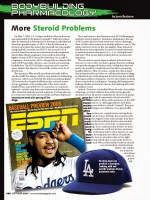
BODYBUILDING PHARMACOLOGY : MORE STEROID PROBLEMS BY JERRY BRAINUM

On May 7, 2009, L.A. Dodger outfielder Manny Ramirez was suspended for 50 games, losing $7.7 million in salary after he admitted to having used a substance called human chorionic gonadotropin, or HCG. A few ill-informed reporters noted that this meant the baseball star was caught using anabolic steroids, but HCG is not a steroid. It’s a protein-based hormone most associated with pregnancy and fertility. Many pregnancy tests work by detecting higher counts of HCG, since the substance rises early in pregnancy. At one point, HCG—along with an extreme diet only of 500 total daily calories—was touted as promoting bodyfat loss. The HCG diet plan is resurrected every few years, despite the absence of scientific evidence for its effectiveness.
The question: Why would a professional male athlete use the stuff? The answer: HCG is very similar to luteinizing hormone, which is secreted by the anterior pituitary gland. LH is involved in female fertility but also controls testosterone synthesis in the Leydig cells of the testes. Bodybuilders have injected HCG—it’s a protein, so it must be injected—to kick-start their own testosterone production after extended anabolic steroid regimens. Doctors also use it to treat men who have used steroids and have depressed testosterone levels after getting off the drugs.

The implication is that Ramirez used HCG following an anabolic steroid regimen. Somehow, admitting to the use of HCG rather than steroids seems less severe, although there is little other reason for a healthy athlete to use it. The whole matter is moot, as the Los Angeles Times reported that Ramirez was suspended because his testostosterone-to-epitestosterone ratio was 4-to-1, 1-to-1 being the normal ratio. That means that he likely did use testosterone injections.
The steroids-in-sports issue is subject to heated controversy. In one corner you have a group that sees nothing wrong with using performance aids, noting that there are rarely any medical complications from their use among healthy athletes. That, of course, avoids the ethical issue: that using steroids and other so-called performance drugs is a blatant form of cheating and detracts from the nobility of being an athletic champion. On the other hand, no drug alone can produce a champion. Training, skill and genetic makeup all play prominent roles in determining who rules the athletic roost.

Indeed, if we were to literally follow the rule of no unfair advantage, we’d ban athletes born with certain genetic mutations from all sports competitions: those born minus genes that code for myostatin; those born with ACTN3 mutations; those with mutations in the ACE enzyme and so on. Although athletes with those mutations are without a doubt “natural,” they possess advantages over athletes not as genetically gifted.
Rare as they are, complications arising from steroid use do occur. Perhaps the primary problem in that regard is that some people may have occult medical problems that become evident following their use of steroids. Complications can range from cardiovascular disease to more benign conditions, such as hair loss and acne.

The medical literature often reports on case studies showing adverse effects of anabolic steroids, but no scientist in his or her right mind would think that a case study proves a cause-and-effect relationship between steroid use and medical complications. Rather, the studies are meant to alert physicians to potential problems. So what follow are a few recently reported case studies involving anabolic steroid use.
The connection between anabolic steroids and blood clotting is controversial. The majority of serious adverse effects, including a few deaths, have involved cardiovascular complications. Most heart attacks and strokes are initiated by a clot that occludes an artery in a heart with blood vessels already narrowed by atherosclerosis. A few body­builders have had minor heart attacks and strokes, although a direct cause and effect has never been established between those symptoms and anabolics. One study showed that high-dose testosterone injections increase hematocrit, or concentration of red blood cells.

1 Thicker blood increases the risk of internal clot formation and boosts the risk of stroke. The higher the dose of testosterone, the greater the effect on hematocrit. High doses can also raise blood pressure, lower protective high-density lipoprotein and adversely affect heart muscle structure. Those effects, however, are offset by the good nutrition and exercise practices of most bodybuilders and athletes, which explains why you rarely see them dropping dead from heart attacks or strokes.

But there can be exceptions. A 19-year-old bodybuilder showed up at a medical clinic with a significant swelling of his left leg.2 He was otherwise healthy and had no family history of abnormal clotting. Tests revealed that the swelling resulted from a clot, which was treated with anticoagulants. The same man returned to the clinic two years later, this time complaining of shortness of breath, chest pain and fever and spitting up blood. Those are signs of a pulmonary embolism, or a blood clot in the lung, which can rapidly prove fatal. He was again given anticoagulants but woke up in the morning with nausea and headache. That proved to be caused by a subdural hematoma, or blood clot on the brain. Further tests showed that he had a genetic deficiency of protein C, which protects against excess clotting.

It turned out that the bodybuilder used high doses of Dianabol. When asked how much he took, he replied, “Usually a handful”; it came in five-milligram tablets. That reminds me of the time I witnessed a well-known bodybuilder casually gulp down an entire bottle of Anavar following dinner by just pouring the pills into his mouth like candy. The point is, this guy wasn’t aware of his clotting problem, which was likely accentuated by his use of Dianabol. Fortunately, he received treatment in time and survived with no complications. Would he have had the pulmonary embolism without using steroids? Difficult to say, but the fact that he had no clotting problems prior to using the steroid does suggest some involvement.

Another case ended more tragically. An autopsy on a 29-year-old man found dead in his house discovered that he had used large doses of the anabolic steroids nandrolone, a.k.a. Durabolin, and testosterone.3 You recall the normal ratio of testosterone to epitestosterone is 1-to-1. This guy showed a 35-to-1 ratio. The cause of death proved to be rare: pulmonary peliosis, characterized by blood-filled cysts in his lungs, which resulted in massive internal hemorrhage and lung collapse.

An earlier case of pulmonary peliosis in a steroid user involved a hospitalized man given Anadrol long-term to treat anemia. (Anabolic steroids are no longer used to treat that particular condition, which is a complication of kidney failure.) Most cases of peliosis in steroid users occur in long-term users, such as hospitalized patients, and happen in the liver. Steroids have, however, been implicated in a few deaths of unhospitalized people, such as the Austrian professional bodybuilder who died several years ago of massive internal bleeding. While liver enzyme abnormalities are common in those on high-dose oral regimens, peliosis hepatitis, as the liver version of the disease is called, is rare.

Another case study links steroid use to multiorgan damage in a 24-year-old man who worked out regularly and didn’t drink alcohol.4 He did, however, inject himself three times a week with testosterone for two months prior to his reported symptoms. His diagnosis was acute pancreatitis, or inflammation of the pancreas, acute kidney failure and elevated blood calcium. Doctors attributed his problems to his very high blood calcium and his steroid use, although the precise amount of testosterone he injected wasn’t disclosed. Curiously, abnormal elevation of blood calcium is almost never observed in athletes who use anabolic steroids.

A recent report involving two young men, aged 21 and 30, attributed their acute kidney injury to their use of steroids and vitamins.

While liver and blood lipid abnormalities are common in those on high-dose steroid regimens, kidney problems are rare. A 1994 case study described a 26-year-old man who developed severe cholestasis—failure of bile circulation due to liver inflammation—and acute kidney injury after using a veterinary form of stanozol, or Winstrol. The swelling was thought to have caused his kidney problem. A 1999 report documented similar problems in another young man who used Dianabol. He recovered rapidly after being treated with a drug used to promote bile flow in his liver.

In the more recent cases the two men were also taking a veterinary supplement containing massive amounts of vitamins A, D and E. The extreme dose of vitamin D resulted in high blood calcium, which produces volume depletion and constriction of the blood vessels in the kidney and, often, kidney damage. Calcium deposits in the kidneys can lead to renal failure. While vitamin D is more often in short supply in most people’s diets, these guys were taking 17,500,000 units once a week. The suggested dose for vitamin D is between 2,000 and 4,000 units daily, and exposure to sun for 30 minutes can produce 10,000 units of D in the skin. No wonder they had kidney problems.

Despite the obvious cause of the men’s problems, the doctors writing the case study attributed their kidney problems to the excessive vitamin intake and anabolic steroids, though the steroids weren’t named. They appear to have based that conclusion on the few reports of kidney problems related to steroid use. Trouble is, most of the prior studies also involved liver problems, and none involved massive, possibly toxic, intake of fat-soluble vitamins. Anabolic steroids here were more than likely innocent bystanders.

While recent headlines about steroid use in sports have focused on baseball, football has been linked to steroid use for years. When you compare the size of today’s pro football players with those of years past, you have to wonder what’s going on. I was asked to give a talk to pro players at a meeting of the National Football League Players Association 22 years ago. My talk was on the topic of how to build muscle without using drugs. After my presentation, though, the players gathered around to ask me about “the best steroid cycles.” They all claimed not to want to use drugs, but since most were linemen, they felt the drugs were a necessary evil for the size they needed to successfully compete.

A recent study surveyed 2,552 retired football players about their competitive use of anabolic steroids.6 Of the responding players, 9.1 percent reported having used steroids. As I found, most were line players, with 16.3 percent of offensive-line and 14.8 percent of defensive-line players using. The retired pros reported a variety of musculoskeletal injuries that they linked to drugs, including disk herniations, knee injuries, elbow injuries, neck injuries, spine injuries and foot, toe and ankle injuries. Interestingly, none reported any connection between steroid use and tendon injuries. Prior studies involving animals had shown that steroids may adversely affect tendon function.

Perhaps the most famous case of a pro football player and steroids was that of Lyle Alzado. Alzado was a ferocious lineman—his famous line was, “If King Kong and me went into an alley, only one of us would come out, and it wouldn’t be the f—in’ monkey.” Years ago he wasted away from the effects of a brain tumor. Alzado attributed his disease to his 26 years of using anabolic steroids without a break. Privately, however, he felt that the tumor got legs from his use of growth hormone, which he added to his regimen when he returned to football at age 40. While some studies do implicate growth hormone in brain tumors, the effect is more theoretical than actual. Children with GH deficiency are treated with GH for years and have no increased incidence of brain tumors.

I suspect that most football injuries stem from the violence inherent in the sport itself rather than from any particular drug use. Few pro football players retire without some kind of chronic injury. On the other hand, a good case can be made for the notorious “’roid rage” shown by some players, such as one guy with the same initials as a popular fruit juice.


References
1 Coviello, A.D., et al. (2008). Effects of graded doses of testosterone on erythropoiesis in healthy young and older men. J Clin Endocrin Metab. 93:914-919.
2 Alhadad, A., et al. (2008). Pulmonary embolism associated with protein C deficiency and abuse of anabolic-androgen steroids. Clin Appl Thromb Hemost. In press.
3 Vougiouklakis, T., et al. (2009). First case of fatal pulmonary peliosis without any other organ involvement in a young testosterone-abusing male. Foren Sci Int. 186(1-3):e13-6.
4 Samaha, A., et al. (2008). Multi-organ damage induced by anabolic steroid supplements: A case report and literature review. J Med Care Reports. 2:340.
5 Daher, E.F., et al. (2009). Acute kidney injury due to anabolic steroid and vitamin supplement abuse: Report of two cases and a literature review. Int Urol Nephrol. 41(3):717-23.
6 Horn, S., et al. (2009). Self-reported anabolic-androgenic steroid use and musculoskeletal injuries. Am J Phys Rehabil. 88:192-200.

Editor’s note: Jerry Brainum has been an exercise and nutrition researcher and journalist for more than 25 years. He’s worked with pro bodybuilders as well as many Olympic and professional athletes. To get his new e-book, Natural Anabolics—Nutrients, Compounds and Supplements That Can Accelerate Muscle Growth Without Drugs,


©,2013 Jerry Brainum. Any reprinting in any type of media, including electronic and foreign is expressly prohibited.


Have you been ripped off by supplement makers whose products don’t work as advertised? Want to know the truth about them? Check out Jerry Brainum's book Natural Anabolics, available at JerryBrainum.com.


Want more evidence-based information on exercise science, nutrition and food supplements, ergogenic aids, and anti-aging research? Check out Applied Metabolics Newsletter at www.appliedmetabolics.com.


The Applied Ergogenics blog is a collection of articles written and published by Jerry Brainum over the past 20 years. These articles have appeared in Muscle and Fitness, Ironman, and other magazines. Many of the posts on the blog are original articles, having appeared here for the first time. For Jerry’s most recent articles, which are far more in depth than anything that appears on this blog site, please subscribe to his Applied Metabolics Newsletter, at www.appliedmetabolics.com. This newsletter, which is more correctly referred to as a monthly e-book, since its average length is 35 to 40 pages, contains the latest findings about nutrition, exercise science, fat-loss, anti-aging, ergogenic aids, food supplements, and other topics. For 33 cents a day you get the benefit of Jerry’s 53 years of writing and intense study of all matters pertaining to fitness,health, bodybuilding, and disease prevention.


See Jerry's book at  http://www.jerrybrainum.com